


Skip to Main Content
Two solicitors engaged in a friendly consultation on a comfortable sofa at Ellis-Fermor & Negus, an East Midlands solicitors' firm. Overlay

Will Validity Disputes Solicitors

Helping resolve disputes that are holding up an estate

When disagreements arise during the administration of an estate, progress can quickly grind to a halt. Executors may face allegations that they are acting improperly, beneficiaries can become frustrated by delays or a lack of information, and family tensions often make matters worse.

In many cases, the dispute is driven as much by uncertainty and communication breakdown as by legal disagreement. Questions about what information should be shared, how long the process should reasonably take, and what decisions an executor is entitled to make can all create friction.

Once trust breaks down, even routine steps in the administration can become contentious and delay the final distribution of the estate.

We regularly advise on disputes involving:

  • Delays in the administration of an estate
  • Executors refusing or failing to provide information
  • Concerns about how estate assets have been managed
  • Disputes between co-executors about the administration of an estate
  • Allegations that an executor has breached their duties
  • Applications to remove or replace an executor or administrator
  • Disagreements over distributions or decisions made during the administration process

These issues can have a significant impact on both the value of the estate and the relationships between those involved. Where estates are tied up in property, investments or business interests, delays can also create additional financial pressure and uncertainty for beneficiaries who may be waiting for funds or final accounts.

At Ellis-Fermor & Negus, we act for both executors and beneficiaries in estate administration disputes. As well as advising on contentious probate claims, we regularly assist with the administration of estates, giving us first-hand insight into how executors are expected to perform their role and where genuine concerns arise. This combination of experience allows us to provide informed, balanced advice aimed at resolving disputes efficiently, reducing unnecessary conflict, and helping clients bring matters to a practical conclusion so they can move forward.


Have a question? Jump to our FAQs ↓
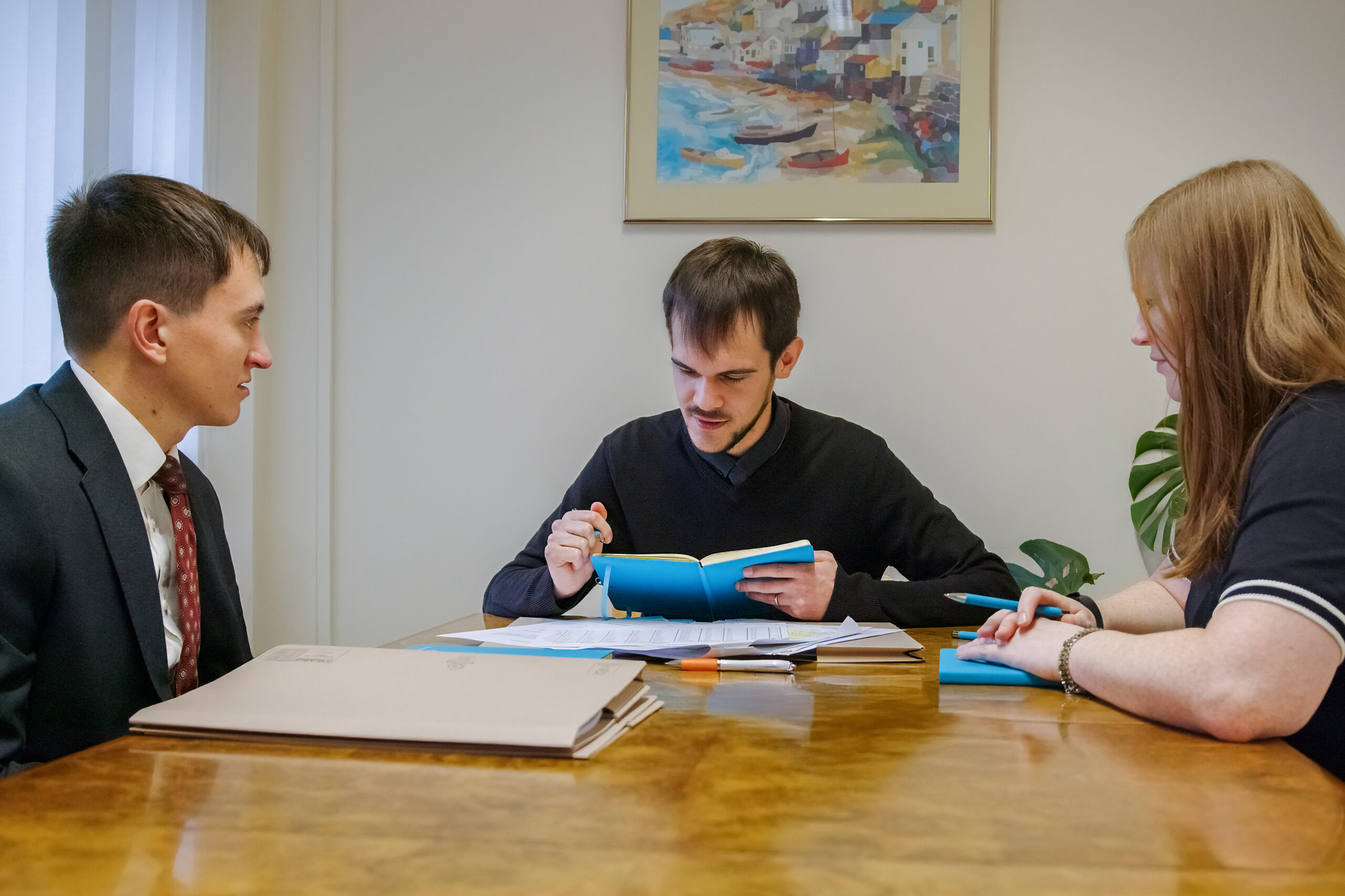
 

Three individuals engaged in a legal consultation at Ellis-Fermor & Negus solicitors office, discussing documents and legal advice.

Make a Free Enquiry Today

infomation@ellis-fermor.co.uk

Service Form
I agree to opt in for marketing
A professional solicitor from Ellis-Fermor & Negus in a striped shirt and tie, representing approachable legal advice in the East Midlands.

‘Tim was always calm and caring….we cannot thank him enough for bringing this lengthy dispute to a successful conclusion. We would highly recommend Tim Jones at Ellis-Fermor & Negus’

Tim Jones

Director and Solicitor

Talk to our team

Why choose Ellis-Fermor & Negus?

Specialist department led by Director, Tim Jones – a full member of the Association of Contentious Trust and Probate Specialists (ACTAPS) and the Contentious Trusts Association (CONTRA).

Consistent track record of resolving cases, often by negotiation or mediation.

We do not operate on a high-volume model, allowing us to give each case the care and attention it deserves.

Experience acting for all parties – claimant, defendant, executor or beneficiary – with a clear understanding of how each side approaches risk and resolution.

Backed by an experienced team specialising in wills, probate and estate administration, working alongside our contentious probate specialists.

Meet the team

Portrait of a male solicitor in a striped shirt and tie, representing Ellis-Fermor & Negus solicitors in the East Midlands.

Tim Jones

Dispute Resolution/Litigation Tim qualified as a solicitor in 2012 having previously studied at the University of Sheffield and Nottingham Law School. He joined Ellis-Fermor & Negus in 2010 and became a Director in 2025. Tim provides advice and representation in relation to a range of civil disputes but with a particular emphasis on:- Inheritance disputes/contested…

01159 725 222

t.jones@ellis-fermor.co.uk

Tim Jones is based at our Long Eaton Office.

View profile
Headshot of a young woman with glasses wearing a striped shirt, representing East Midlands solicitors

Charlotte Price

Charlotte qualified as a Solicitor in 2025 having joined the firm as a trainee in 2023. Prior to that, she studied LLB Law at the University of Nottingham, graduating in 2022 with a first. She then completed the LLM Legal Practice Course at Nottingham Law School. Charlotte provides advice on a range of civil disputes…

0115 972 5222

Charlotte.Price@ellis-fermor.co.uk

Charlotte Price is based at our Long Eaton Office.

View profile

Solicitors discussing legal matters during a consultation at Ellis-Fermor & Negus in Beeston

Reviews, what our clients are saying…

‘We met Tim Jones at a very anxious time for us …..he was kind and caring going the extra mile to ease our concerns. Tim was very knowledgeable and professional. Tim kept us updated at all times during the process… his advice was always sensible .Tim was very approachable ..we would highly recommend Tim and will use him again we trust him …’

‘Darren, Sarah and the team were incredible – so supportive and understanding throughout the process. This was my first experience requiring a solicitor of this nature, and they took the time to explain the steps clearly and answer all my (many) questions. They always answer the phone first time, respond to emails quickly and handled the whole situation very swiftly, professionally and with care, with a positive result at the end. Thank you so much Darren, Sarah and team!’

‘Ben provided me with some excellent advice and dealt with my matter swiftly and efficiently. His friendly but professional manner and the way he described and explained the various clauses gave me the confidence that I needed to sign the documentation without hesitation. Thanks also goes to Eliza for making the necessary arrangements and keeping me informed.’

‘EF&N responded to my initial enquiry very diligently and quickly. That level of service continued through to closing out the matter. We are very satisfied with the service provided by Darren Kelly and his team. Lines of communication were clear. The EFN team were easy to contact and responded to correspondence quickly. EFN will be our ‘go to’ firm of solicitors for all legal matters in future. Many thanks.’

‘Tim jones, acted quickly and made sure to give me time of day even with my busy schedule. Tim made things super easy to understand. Will definitely use again if needed, and recommend Tim, thankyou.’

Frequently Asked Questions

A Will may be invalid if:

  • The person making it lacked mental capacity.
  • They were subjected to undue influence or pressure.
  • They did not know or approve of the contents of the Will.
  • The Will was forged or obtained by fraud.
  • The legal requirements for signing and witnessing the Will were not followed.

Each case turns on its own facts, and specialist legal advice is usually required before a firm conclusion can be reached.

Typically, anyone who would benefit financially if the Will were declared invalid may have standing to challenge it. This often includes:

  • Beneficiaries under an earlier Will.
  • Family members who would inherit under the intestacy rules.
  • Individuals who have been excluded or received substantially less than expected.

Unlike claims under the Inheritance (Provision for Family and Dependants) Act 1975, there is generally no strict limitation period for a Will validity challenge.

However, delay can cause serious problems. Evidence may be lost, witnesses’ memories may fade, and the estate may be distributed. It is therefore advisable to seek legal advice as soon as concerns arise.

Yes.

A Will can still be challenged after probate has been granted. However, if estate assets have already been distributed, the practical difficulties and costs of pursuing a claim may increase significantly.

In many cases, yes.

A caveat can be entered at the Probate Registry to prevent a grant of probate from being issued while concerns regarding the validity of a Will are investigated.

A caveat should not be entered lightly, and legal advice should usually be obtained beforehand

A caveat is a formal notice lodged at the Probate Registry which temporarily prevents a grant of probate from being issued.

It is commonly used where there are concerns regarding:

  • Testamentary capacity.
  • Undue influence.
  • Fraud.
  • Forgery.
  • The existence of a later Will.

Testamentary capacity refers to the legal and mental ability required to make a valid Will.

The person making the Will must understand:

  • That they are making a Will.
  • The nature and extent of their assets.
  • Who may reasonably expect to benefit from their estate.
  • The effect of the decisions they are making.

Yes.

A diagnosis of dementia does not automatically mean that a person lacks testamentary capacity. Many individuals with dementia remain capable of making a valid Will, particularly during the earlier stages of the condition.

The key question is whether they had the necessary capacity when the Will was made.

Evidence may include:

  • GP records.
  • Hospital records.
  • Care home records.
  • Medical expert reports.
  • Solicitor attendance notes.
  • Witness statements from family members and friends.

The quality of the evidence is often critical to the outcome of the case.

Undue influence occurs where someone exerts pressure on a person to make a Will they would not otherwise have made.

Examples may include:

  • Threats.
  • Coercion.
  • Bullying.
  • Emotional manipulation.
  • Exploitation of a vulnerable individual.

Simple persuasion or discussion is not enough. The pressure must effectively overpower the person’s free will.

Yes.

Undue influence claims are often among the most challenging Will disputes because the conduct usually takes place in private and direct evidence is rarely available.

Successful claims frequently rely upon a combination of surrounding circumstances and documentary evidence.

Even if a person had capacity, a Will may still be invalid if they did not understand or approve its contents.

This issue commonly arises where:

  • The Will was prepared by a beneficiary.
  • The deceased was unable to read the document.
  • Significant changes were made shortly before death.
  • There are suspicious circumstances surrounding the Will’s preparation.

If a Will is declared invalid, the estate will usually pass under:

  1. A previous valid Will; or
  2. The intestacy rules if no earlier valid Will exists.

The financial consequences can be substantial.

The intestacy rules determine who inherits where a person dies without a valid Will.

The rules prioritise certain family members and do not always reflect what the deceased may have wanted.

Yes.

An executor may have concerns regarding the validity of the Will they are named in and can take appropriate legal steps to investigate those concerns.

Executors must act carefully and remain mindful of their duties to the estate.

Yes.

Executors are often named as defendants in Will validity proceedings because they are responsible for administering the estate.

They may take a neutral position or actively defend the claim, depending on the circumstances.

There is no automatic rule.

The court has a wide discretion regarding costs. In some cases, costs may be paid from the estate. In others, the unsuccessful party may be ordered to pay a substantial proportion of the successful party’s legal costs.

Costs are therefore an important consideration from the outset.

Many do not.

Most disputes settle through negotiation, mediation or other forms of alternative dispute resolution before a final trial becomes necessary.

However, where settlement cannot be achieved, court proceedings may be required.

The court expects parties to seriously consider mediation and other forms of alternative dispute resolution.

A party who unreasonably refuses mediation may face adverse costs consequences, even if they ultimately succeed at trial.

This depends on the complexity of the case.

Straightforward disputes may resolve within a few months, whereas heavily contested High Court litigation can take considerably longer.

Factors affecting timescales include:

  • The amount of evidence required.
  • Whether expert evidence is needed.
  • The number of parties involved.
  • The willingness of the parties to negotiate.


Costs vary significantly depending on the complexity of the dispute and whether court proceedings become necessary.

During an initial consultation, we can discuss likely costs, funding options and the most proportionate way to pursue your objectives.

Will validity disputes involve a specialist area of law combining probate, evidence and litigation principles.

Obtaining advice from a solicitor experienced in contentious probate can help identify the strengths and weaknesses of a claim at an early stage and avoid unnecessary costs.

You should seek specialist legal advice as soon as possible.

Early advice can help preserve evidence, protect the estate from distribution and place you in the strongest possible position to investigate or pursue a claim.

Contact us

• Phone:

0115 972 5222 (Long Eaton)

0115 896 3390 (West Bridgford)

0115 922 1591 (Beeston)

01773 821665 (Belper)

01773 744744 (Ripley)

• Email: infomation@ellis-fermor.co.uk

• Online Enquiry: ellis-fermor.co.uk/contact-us

Get expert advice on caveats in probate today


Speak to us without obligation

Ellis Fermor 2026 All rights reserved. Website by Fifteen.co.uk